


Soumettre des commentaires
How to Make Silicone Hoses: A Step-by-Step Guide to Silicone Meter Hose Manufacturing
Actualités de l'industrie-Comment fabriquer des tuyaux en silicone : la réponse courte
Les tuyaux en silicone sont fabriqués en enroulant des feuilles de caoutchouc de silicone non durcies et du tissu de renforcement autour d'un mandrin en acier, couche par couche, puis en durcissant l'assemblage sous chaleur et pression jusqu'à ce qu'il se vulcanise en un tube solide et flexible. Les étapes principales sont composition de matériaux, calandrage, emballage de mandrins, rubanage, durcissement en autoclave, démoulage et détourage . Un typique tuyau de compteur en silicone - vendu en longueurs de 1 mètre pour les conduites de liquide de refroidissement, d'admission et de transfert de fluides industriels - utilise 3 à 5 couches de renfort en polyester ou en aramide et prend environ 45 à 90 minutes pour durcir complètement, en fonction de l'épaisseur et du diamètre de la paroi.
Le reste de cet article détaille chaque étape de production, les matériaux impliqués, les spécifications qui définissent un tuyau de compteur de qualité et comment juger si un tuyau que vous achetez ou construisez répond aux normes de l'industrie.
Quels matériaux entrent dans un tuyau en silicone
Chaque tuyau en silicone est à l'origine du caoutchouc de silicone brut, généralement un élastomère durci au platine ou au peroxyde, choisi pour sa pureté, sa stabilité thermique et sa flexibilité. Ce matériau de base est mélangé avec des charges et des additifs avant même de toucher un mandrin.
Composants de base
- Base en caoutchouc de silicone – offre la résistance à la chaleur, à l'ozone et aux UV pour laquelle le tuyau est connu.
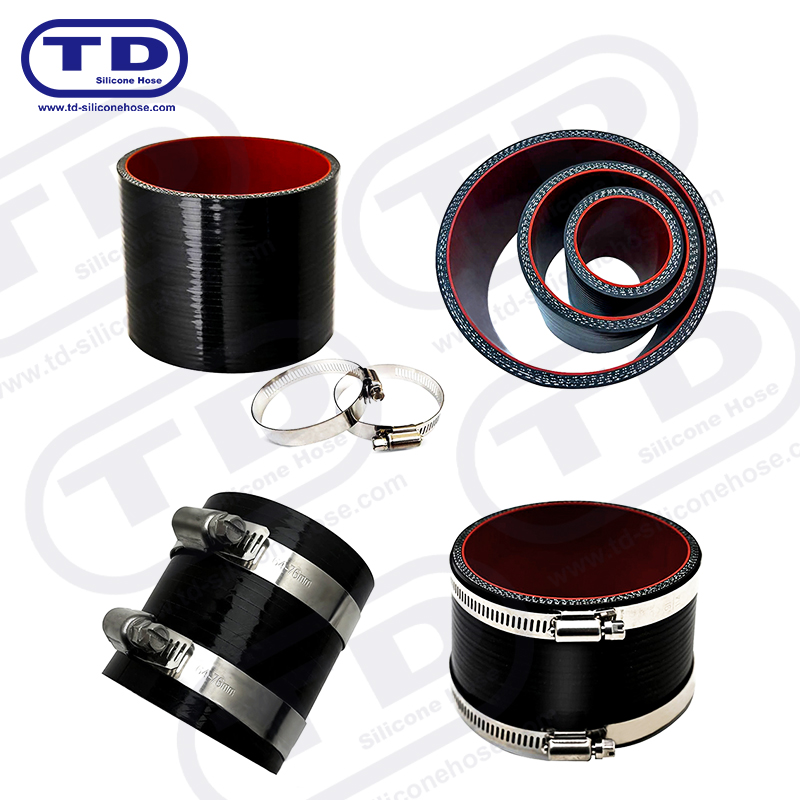
- Couches de tissu renforcées : maille en polyester, aramide ou fibre de verre prise en sandwich entre des couches de silicone pour contrôler la pression d'éclatement
- Agents de durcissement – déclenchent la vulcanisation, le processus chimique qui transforme le composé mou en un tube élastique solide
- Pigments et charges : contrôlez la couleur et ajoutez des propriétés comme le noir de carbone pour la protection UV
Le nombre de plis de renfort est le facteur le plus important dans la pression nominale d'un tuyau. En règle générale, les tuyaux de moins de 50 mm de diamètre intérieur utilisent un minimum de 3 plis, les tuyaux entre 50 mm et 102 mm utilisent 4 plis, et tout ce qui dépasse 102 mm nécessite 5 plis ou plus. pour maintenir une pression de travail comparable.
Le processus de fabrication des tuyaux en silicone, étape par étape
La fabrication d'un tuyau en silicone est un processus de fabrication séquentiel et non une opération de moulage en une seule fois. Chaque étape doit être effectuée correctement, sinon le tuyau final présentera des points faibles, des pièges à air ou des parois inégales.
Étape 1 : Fraisage et mélange
Le caoutchouc de silicone brut et les pigments sont introduits dans un broyeur à deux rouleaux, qui presse le composé entre les rouleaux jusqu'à ce qu'il forme une feuille uniforme. Cette étape, appelée fraisage, garantit que le matériau a une épaisseur constante et aucun air emprisonné avant d'aller plus loin.
Étape 2 : Calandrage
Le composé broyé passe dans une calandre qui le roule en feuilles fines et mesurées avec précision. Ces feuilles deviennent les couches individuelles qui sont ensuite enroulées autour du mandrin, de sorte que la précision de l'épaisseur à ce stade détermine directement l'épaisseur finale de la paroi du tuyau.
Étape 3 : Emballage et construction du mandrin
Un mandrin en acier est façonné pour correspondre à la géométrie interne du tuyau : droit, coudé ou courbé sur mesure. Les ouvriers enroulent des couches alternées de feuille de silicone et de tissu de renforcement autour du mandrin à la main ou avec une machine d'emballage, construisant ainsi le mur jusqu'au nombre de plis spécifié. C'est l'étape qui définit si le tuyau fini est un simple tuyau de compteur en silicone ou un coude moulé avec plusieurs angles de courbure.
Étape 4 : enregistrement
Un ruban de liant est enroulé étroitement autour des couches enveloppées pour les comprimer ensemble avant de durcir. Cela maintient chaque pli en place et expulse l'air emprisonné, ce qui empêche la formation de bulles ou le délaminage dans le produit final. Après durcissement, le ruban est retiré et jeté.
Étape 5 : Durcissement (vulcanisation)
L'assemblage du mandrin scotché est placé dans un autoclave ou un four, où la chaleur et la pression déclenchent la vulcanisation – la réaction chimique qui réticule les molécules de silicone en une structure solide et élastique. Les températures de durcissement se situent généralement entre 150°C et 200°C , avec des temps de cycle allant de 30 minutes pour les tuyaux industriels à paroi fine et de petit diamètre à plus de 90 minutes pour les tuyaux industriels à paroi épaisse et de grand diamètre.
Étape 6 : Démoulage, découpage et finition
Une fois durci, le tuyau est retiré du mandrin, le ruban de reliure est retiré et l'excédent de matériau est coupé aux deux extrémités. Le tuyau est ensuite soumis à une inspection visuelle et dimensionnelle pour vérifier les défauts de surface, la cohérence des parois et la précision ID/OD avant d'être approuvé pour la vente.
Spécifications du tuyau de compteur en silicone que vous devez connaître
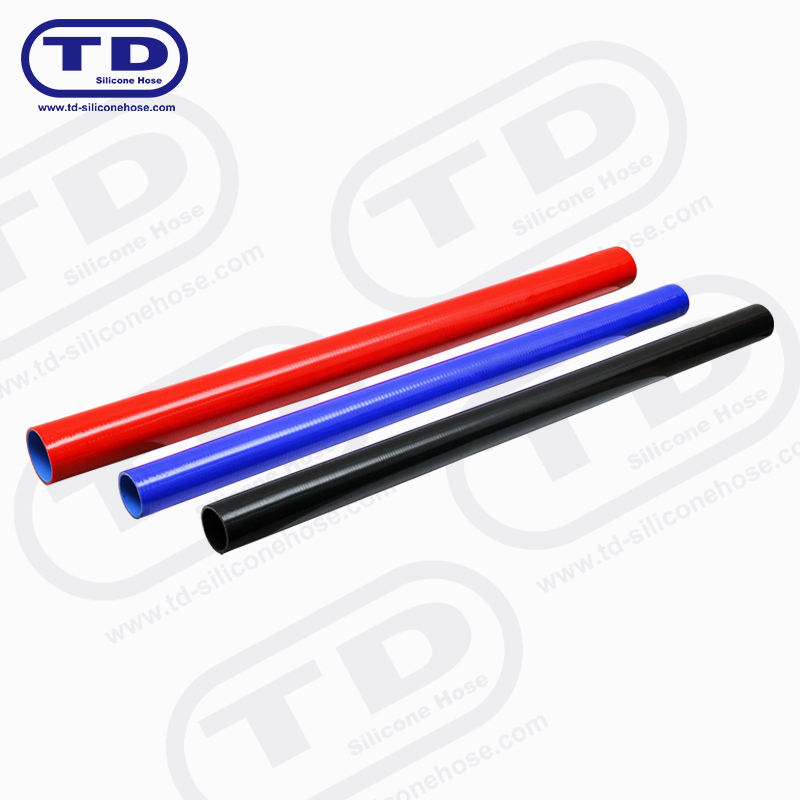
Un « tuyau de compteur » fait simplement référence à une section de tuyau en silicone droite vendue en longueurs de 1 mètre, le format standard pour la plomberie personnalisée de liquide de refroidissement, d'admission et d'aspiration où l'installateur coupe et joint les sections pour s'adapter à sa propre disposition. Les spécifications varient selon le diamètre, mais le tableau ci-dessous montre les chiffres typiques pour les tailles courantes.
| Diamètre intérieur | Couches de renfort | Épaisseur de paroi | Pression de service | Pression d'éclatement |
|---|---|---|---|---|
| 13 mm (1/2") | 3 plis | 4mm | ~80 livres par pouce carré | ~340 livres par pouce carré |
| 25 mm (1") | 3 plis | 4,5 mm | ~55 livres par pouce carré | ~232 livres par pouce carré |
| 76mm (3") | 4 plis | 5mm | ~26 livres par pouce carré | ~78 livres par pouce carré |
| 89 mm (3,5") | 4 plis | 5,5 mm | ~19 livres par pouce carré | ~78 livres par pouce carré |
Notez le motif : à mesure que le diamètre intérieur augmente, la pression de travail diminue même si le nombre de plis augmente. Il s'agit d'une réalité structurelle de l'ingénierie des tuyaux, et non d'un raccourci de fabrication : les diamètres plus grands ont plus de surface sur laquelle la pression interne peut agir, de sorte que la même construction de paroi donne une pression de fonctionnement sûre plus faible. La pression de service est généralement calculée à environ un tiers de la pression d'éclatement , offrant une marge de sécurité intégrée pour une utilisation continue.
Plage de température et résistance chimique
L’une des principales raisons pour lesquelles les fabricants choisissent le silicone plutôt que l’EPDM ou le caoutchouc standard est la plage thermique. Un tuyau en silicone correctement durci reste flexible et structurellement solide sur une bande beaucoup plus large que les composés de caoutchouc conventionnels.
- Tuyau de compteur en silicone standard : -50°C à 180°C (-76°F à 356°F) service continu
- Qualités haute température : jusqu'à 200°C à 250°C pour les applications adjacentes au turbo et à l'échappement
- Grades pour temps froid : jusqu'à -65°F (-54°C) pour usage aéronautique et industriel en climat froid
Le tuyau en silicone standard n'est pas formulé pour résister aux fluides à base de pétrole comme le carburant ou l'huile : il gonflera et se dégradera au contact. Si un tuyau doit transporter du carburant ou de l'huile, il a besoin d'un doublure intérieure en fluorosilicone collé aux couches externes de silicone pendant la phase d'emballage, ce qui est une décision de matériaux prise avant le début de la construction, et non quelque chose qui peut être ajouté par la suite.
Des contrôles de qualité qui séparent les bons tuyaux des mauvais.
Étant donné que les tuyaux en silicone sont fabriqués à la main couche par couche, le contrôle qualité est plus important ici que dans le cas des pièces extrudées ou moulées par injection. Quelques contrôles visibles et mesurables vous indiquent si un tuyau a été réalisé correctement.
- Passez un doigt le long de l'alésage intérieur : il doit être lisse, sans crêtes, ni rides ni lignes de chevauchement provenant de l'étape d'emballage.
- Vérifiez l'épaisseur de la paroi en plusieurs points autour de la circonférence : une variation de plus de 0,5 mm suggère un calandrage ou un emballage irrégulier.
- Recherchez des bulles d'air ou des cloques sous la surface, ce qui indique de l'air emprisonné qui n'a pas été expulsé pendant le rubanage.
- Confirmez que le nombre de plis de renfort correspond aux directives de diamètre dans le tableau des spécifications ci-dessus.
- Demandez les données du test de pression d'éclatement, pas seulement la pression nominale de service : des fabricants réputés testent et documentent les deux.
Un tuyau qui ne colle pas correctement ou qui accélère le cycle de durcissement peut avoir une belle apparence extérieure tout en cachant une faible adhérence entre les couches. Ce type de défaut n'apparaît généralement que sous une pression soutenue ou un cycle de chaleur, ce qui est exactement la condition dans laquelle le tuyau est censé survivre - de sorte que les étapes d'inspection ci-dessus comptent plus qu'un simple coup d'œil visuel.
Choisir le tuyau de compteur en silicone adapté à votre application
Faire correspondre un tuyau à sa tâche se résume à trois variables : le diamètre, le nombre de plis et la compatibilité des fluides. Se tromper sur l’un de ces éléments gaspille de l’argent en renforcements inutiles ou risque un échec prématuré.
| Application | Spécification de priorité | Nombre de plis typique |
|---|---|---|
| Conduites de liquide de refroidissement/radiateur | Plage de température | 3 plis |
| Tuyauterie turbo / intercooler | Pression de travail | 4 plis |
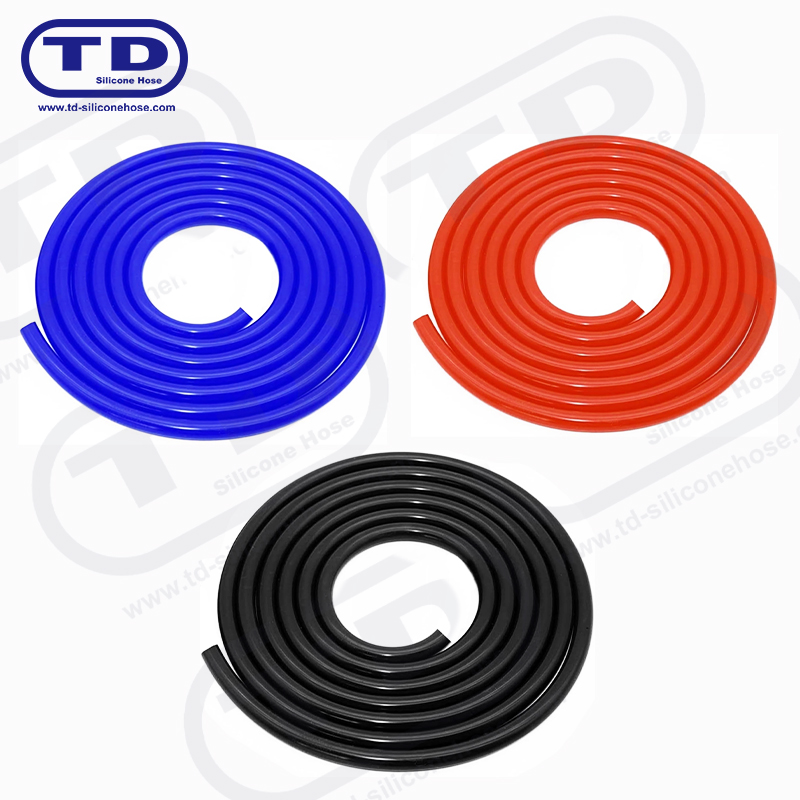
| Conduites de vide/reniflard | Flexibilité, rayon de courbure | 1 à 2 plis |
| Transfert de fluides industriels | Résistance chimique | 3 à 5 plis |
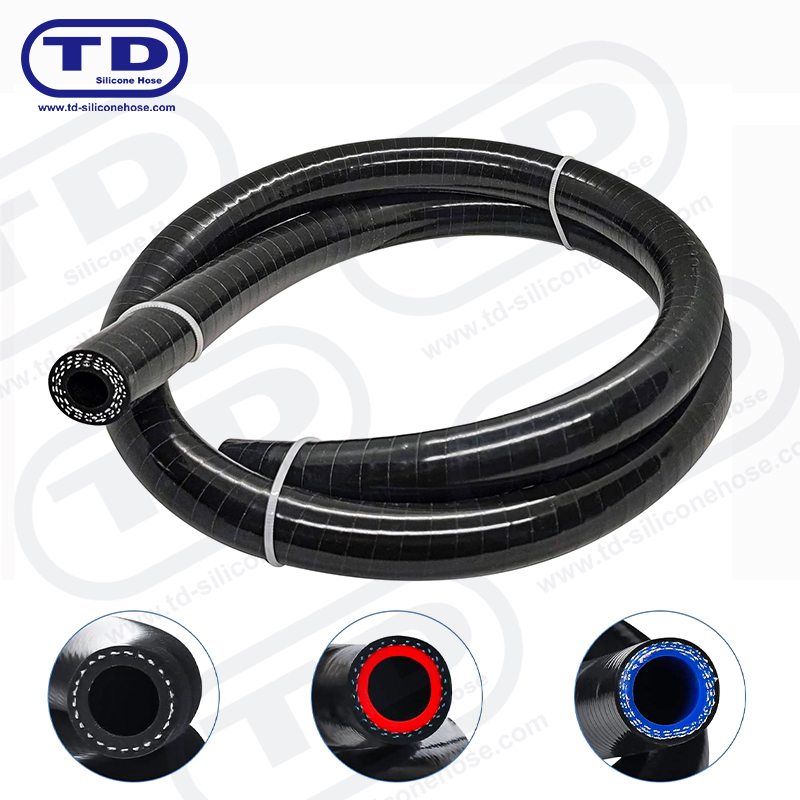
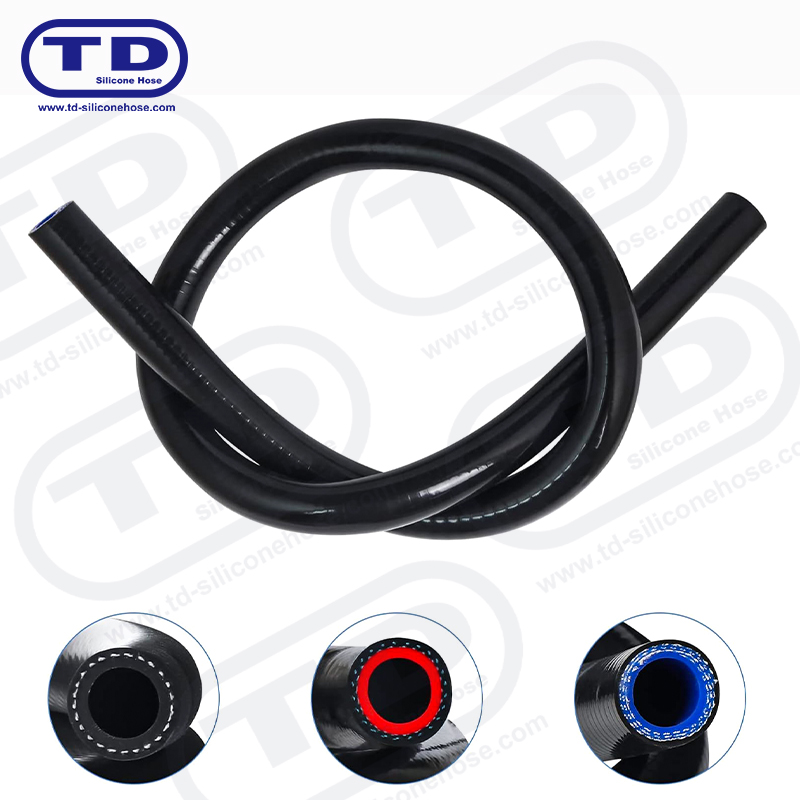
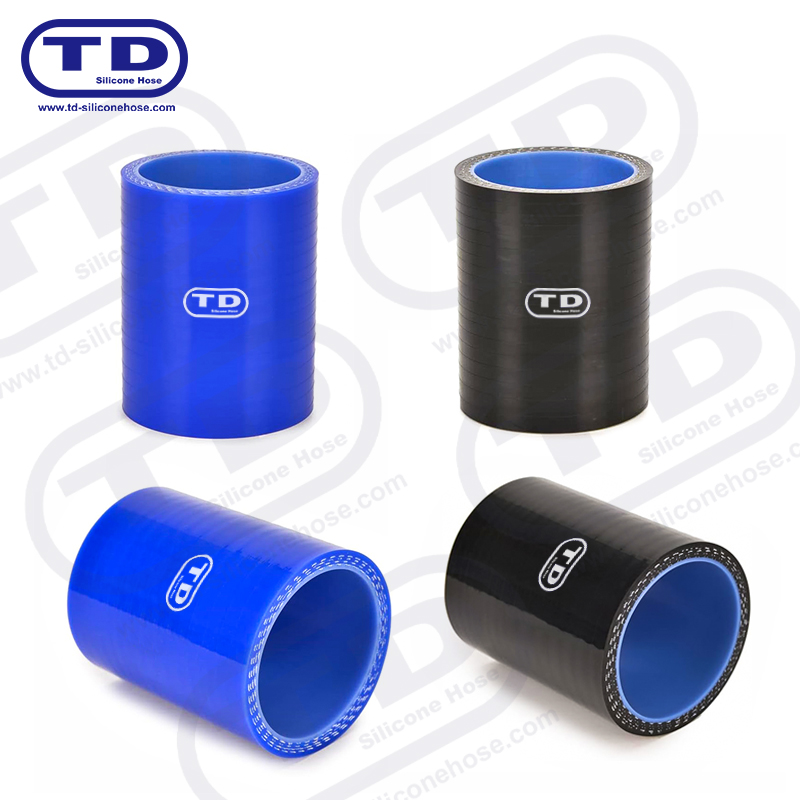
Pour les travaux de fabrication personnalisés, l'achat de sections droites d'un mètre de longueur et leur assemblage avec des raccords de tuyau offrent plus de flexibilité que les formes prémoulées, puisqu'un seul mètre peut être coupé en plusieurs pièces de connecteur courtes ou jointes bout à bout pour des courses plus longues. C'est pourquoi le Format droit 1 mètre reste l'unité de stock standard chez les fournisseurs de l'automobile, de la marine et de l'industrie légère.
Notre produit //
Ningbo Tiandai Auto Parts Co., Ltd. Tous droits réservés. Tous réservés.
